Thursday, December 10, 2015

Household Growth in New Orleans Increases over the Past 5 Years

Not only have the New Orleans house prices increased 46% since Hurricane Katrina hit 10 years ago, but the city has also seen a 90% recovery rate. Many believed that the tens of thousands who fled the area after Hurricane Katrina would not return, and this was simply not the case. A report which came out on July 13, 2015, from Data Center shows that between 2010 and 2014, the growth in New Orleans was 12%, making the city 28th in population growth among 714 cities with more than 50,000 people nationwide. The study also indicated there was an additional 1% growth between 2014 and
2015.

In the New Orleans area, households that received mail increased by 19,651 since June 2010, with 65 out of 72 neighborhoods seeing some sort of increase. In general, 40 of the 72 neighborhoods have already recovered 90% of the population pre-Katrina and 16 neighborhoods have actually exceeded their pre-Katrina population.

The neighborhoods which saw the fastest recovery rate of at least 30% were ironically the most heavily flooded areas. These include households in Filmore, Holy Cross, Lakeview, Lower 9th Ward, Pines Village, Pontchartrain Park and West Lake Forest. Between 2010 and 2014, the areas known as the “sliver by the river”, added 1,355 households in the Central Business District (CBD), 545 households in Treme/Lafitte, 321 households in the Lower Garden District and 297 households in Bywater. Eight neighborhoods have increased by at least 100 households which include the Central Business District (CBD), Central City, St. Roch, Little Woods, Lower 9th Ward, B.W. Cooper, 7th Ward and Treme/Lafitte.

Only four of these neighborhoods have less than 50% pre-Katrina households. These include B.W. Cooper, Florida, Iberville and Lower 9th Ward. Not to worry, B.W. Cooper, Florida and Iberville are housing developments that have mostly been demolished or are being redeveloped so they cannot be considered households until completed. The Lower 9th Ward was the worst damaged from the storm and is making a slower recovery than most. Only seven neighborhoods lost households between 2010 and 2015. Many are relocating to the city of New Orleans “proper” and its surrounding or suburb neighborhoods, placing a great demand on new housing developments. In general, New Orleans is making a great recovery and is holding steady with its population numbers.


Click Here to View the Source of the Information.

Friday, December 4, 2015

New Changes in Urban Design and Development

Even though Hurricane Katrina only devastated the Gulf Coast and the Greater New Orleans area, the whole world felt her effect. It has been ten years since the horrendous storm blasted through the Gulf Coast and the lessons learned have become the model for cities around the world as they plan and prepare for severe weather and rising sea levels. In essence that one storm became the catalyst for
new changes in urban design and development around the world.

No one was prepared for the lives lost and communities lost by Katrina. The Urban Land Institute (ULI) realized that this was a wake-up call for all communities in the area of buildings’ resilience to storms. Buildings must be built with every detail looked at when facing the challenge of a major storm. Not only did New Orleans need to have many buildings rebuilt, but they also needed to be built better than before. Part of this process was not only to focus on the buildings themselves but the land and environment around the community. This was done by restoring marshland and wetlands that aid in absorbing floodwaters, building affordable houses with green technology, and using other means of building that do not solely depend on oil and gas.

According to Sarene Marshall, executive director for ULI’s Center for Sustainability, “The result is a city that is more environmentally sustainable, socially cohesive, and economically prosperous, and is as a result attracting new residents, businesses and investors.”

ULI studied other communities around the world who have also been proactive in their storm protection. These cities have focused on resilience and molding their infrastructures to climate
change. Small coastal towns to larger tourist oceanfront resorts have all been affected by the climate change which includes rising sea levels, extreme heat, drought and stronger storm activity. Marshall explained, “As the resilience movement has gained momentum, we are seeing innovative approaches to the planning, design, development, financing, and insuring of real estate.”

The Urban Land Institute (ULI) reported that cities around the world are building for resilience which is not only protecting from bad weather but also improving local and economic growth and quality of life. Resilient design strategies enable a stronger defense against extreme weather which makes communities healthier and more desirable places to live. How are communities doing this? They are taking a holistic approach. Cities are building developments that are walkable and mixed-use which encourage social interactions among neighbors.
 
The public and private sectors are also building community amenities such as parks, trails, and fitness centers which are also being used for neighbors to connect socially and to be used as emergency escape routes during a storm. Homes in these developments are not only able to withstand extreme weather but also reduce energy and water use which can cut utility cost.

ULI’s Marshall backs up this theory stating, “Being resilient means focusing on adaptation and flexibility of space, so that building uses can change over time to 1) meet the new needs and preferences of residents, and 2) be better equipped to withstand environmental and economic stresses.”

The design of a community can prepare it for severe weather. Not every community should be designed the same. There are a couple of factors to consider such as the types of risks faced and the scale of action. An example of this is considering strategies and risks for someone who is building in a flood zone. These could include raising electrical equipment above the first floor and using water resistant materials in lower levels of the home. ULI has a publication called “A Guide for Assessing Climate Change Risk” which will assist in choosing the correct strategies and actions to take when dealing with disasters. Basically it comes down to understanding the risks and tailoring a strategy for a specific community.

Thankfully ULI has been there for New Orleans during the rebuild after Katrina. ULI has provided guidance and assistance to New Orleans’ development industry through their “Resilience Strategies for Communities at Risk” where the relationship between built and human systems is considered when building housing in the Greater New Orleans area developments.


Click Here for the Source of the Information.
Friday, October 30, 2015

Land on the West Bank, Close to New Orleans

Sometimes, the southern region of the crescent in the Crescent City of New Orleans gets overlooked for its potential to offer benefits for those home buyers who are interested in being near New Orleans but not necessarily living in the city of New Orleans.  Land on the West Bank is still available in an established, master planned community just over the Intercoastal Waterway in Plaquemines Parish.  Plaquemines Parish is an odd-shaped piece of land that extends from the “base” of New Orleans all the way down to where the land seems to disappear into the marsh.  Because of this, the parish gets a reputation for being flood prone or “too far south” to be livable for those looking to commute to work everyday in the Central Business District (CBD).

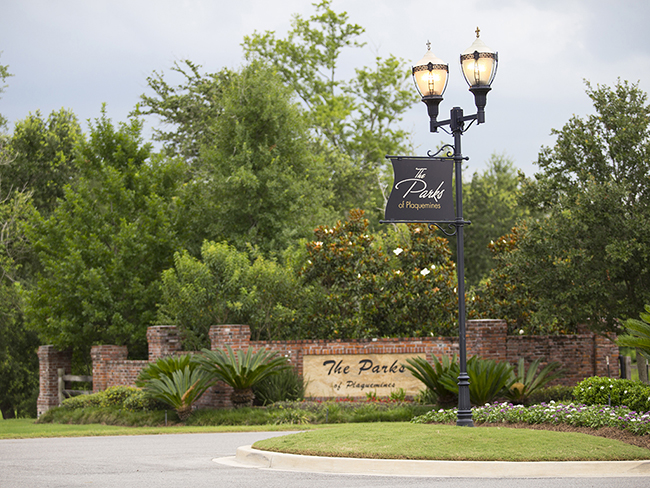
5-094At The Parks of Plaquemines in Belle Chasse, Louisiana, we offer the best of both worlds.  You can live in a parish that has significantly lower bills (taxes, city rents, utilities), in a gated community, in a safe environment (only one way in or out of the parish from our location with low crime), only 10.2 miles from downtown New Orleans.  Also, a HUGE perk of choosing to live just outside of the city limits is the fact that Plaquemines Parish has one of the best rated school districts in the state of Louisiana, so if you are moving with your family, there is a guaranteed quality school district to send your children.

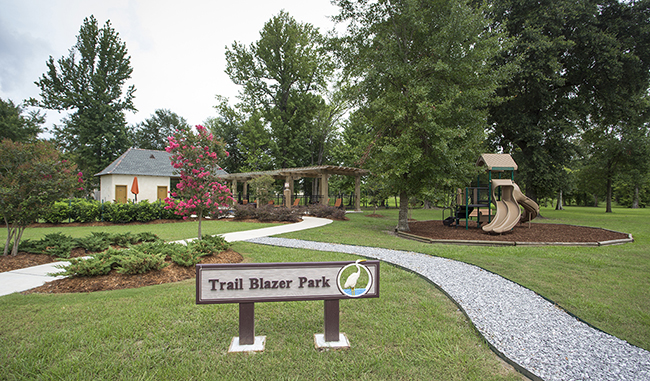
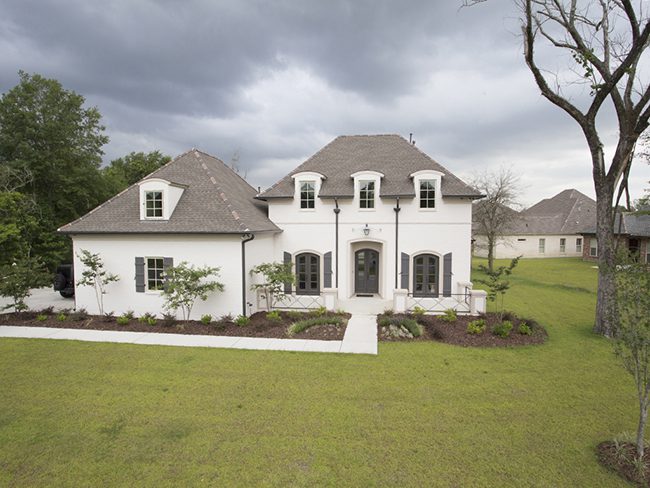
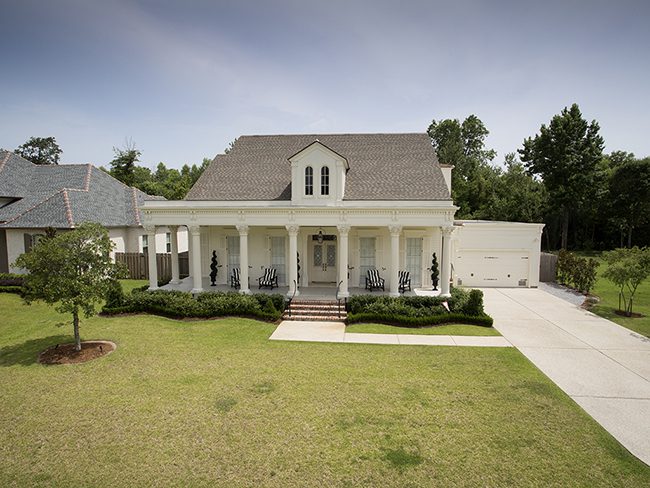
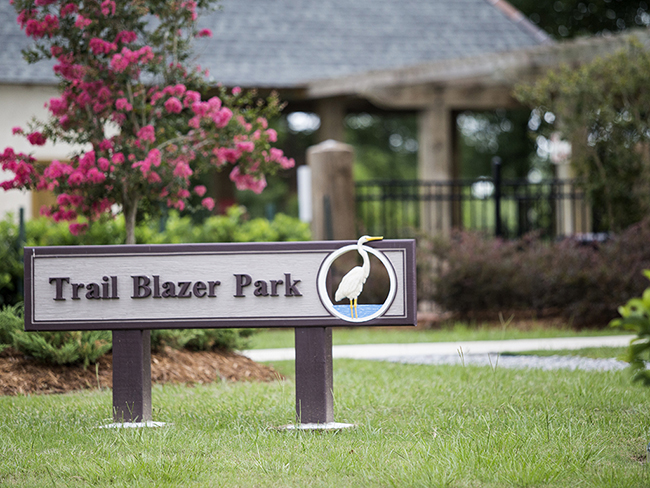
The subdivision itself also has a lot to offer.  In addition to being able to buy your own lot and custom build your new home (if you wish); you can also enjoy walking and hiking trails carved out around the community.  Inside the community we have built a community swimming pool, tot lot / playground, and tennis courts as amenities for our new home buyers.  New Homes are available now at The Parks of Plaquemines, and we are slowly building out the community with both traditional housing as well as new construction garden homes in our Villas Neighborhood.

3-099Our master planned neighborhood is located near everything the West Bank in Jefferson Parish has to offer with shopping, dining, and entertainment locations, the day-to-day office visits that are “life necessary” such as doctor’s and dentist’s visits, veterinarian appointments, and even home business visits such as accountants and lawyers.   There are two ways to access New Orleans – across the Crescent City Connection bridge or by ferry at Algiers Point.  New ferry boats are in the works because of a bill signed recently by the governor to get them operational as well.

Real estate in New Orleans is scarce, and prices are higher because of supply and demand.  If you are interested in living in an established neighborhood, you may want to consider living a little bit farther away in the comfort of a beautifully maintained and quality built subdivision such as The Parks of Plaquemines.  Contact Us at 504-364-2350 or E-mail Info@TheParksLifestyle.com for more information.


Monday, October 26, 2015

Single-Family Homes in the Greater New Orleans Area

New home starts for single-family homes in the Greater New Orleans area are on the rise, according to Jon Luther with The Home Builders Association of Greater New Orleans.  New construction starts were at 1.21 million last month, and that included single-family home starts of 600,000 – 700,000.  Between commercial building conversions and new construction, apartments are leading the race on new construction in New Orleans simply because the opportunity to build new homes is more limited within the city limits because of the lack of land to build.  However, even if builders cannot start and build out full-scale, new home developments, there is plenty of new construction going on in the city
in the form of tearing down blighted housing and even taking an existing home “back to the studs” and starting over again as a complete rebuild.

“Anytime you see 600,000 to 700,000 new (single-family) starts, home builders are going to be pretty damn happy,” Luther said. “They’re the best numbers we’ve seen in about 10 years.”
According to Luther, the best chance that New Orleans has of starting and building a large scale development would be to utilize the 5,000 acres of land near the Avondale shipyard.  Officials in Jefferson Parish have had several meetings about rezoning this property which is owned by several different owners.  If they were to release the land for building purposes, New Orleans would be able to develop and build either a Traditional Neighborhood Development (TND) or similar master planned community on this property.

Another obstacle for providing new homes for home buyers on the Southshore in New Orleans is that it is difficult for builders to provide housing for first-time home buyers.  According to Luther, the appraisal system in New Orleans recently went through an overhaul to ensure that appraisers knew how to appraise a new home for sale in New Orleans because the values given during appraisals were losing local builders a lot out of their profit margins.  Also, with the recent concessions by the
Department of Housing and Urban  Development in lowering the down payments on FHA loans for first time home buyers, there is now a possibility of Millenials being able to move out of apartment living in owning their own home – as long as affordable housing can be built in New Orleans.

If you are interested in living close to New Orleans but not having to “pay for it” with higher taxes, higher utilities, and city rents, you should consider moving to The Parks of Plaquemines, a masterplanned subdivision located just 10 miles from the Central Business District in New Orleans, across the Intercoastal Bridge.  With a convenient location, safer neighborhood proximity, and a little bit more lot space on which to play, The Parks of Plaquemines offers lots for sale and homes for sale at competitive new home pricing.  Contact Us at 504-364-2350 or E-mail Info@TheParksLifestyle.comInfo@TheParksLifestyle.com for more information.

 
Click Here for the Source of the Information.

Thursday, October 8, 2015

New Orleans Convention Center to Expand Its Economic Reach

With the latest addition of developed riverfront property on the Mississippi River in and around the French Quarter, many local New Orleans’ businesses have expressed an interest in developing riverfront property into usable and money-making ventures to encourage more visitors, tourists, and business to come to New Orleans.  Because of this, there are plans for the New Orleans Convention Center to expand its economic reach “upriver” on 47 acres of property.  Owners of the Ernest N. Morial Convention Center are in talks with Howard Hughes Corp. and local developers Joe Jaeger and Darryl Berger to build a 1,200 room hotel which would also be surrounded with retail, entertainment, restaurants, and housing in the form of condos and apartments.

Because the current configuration of the Convention Center is “walled off” from the river, this new construction project will offer guests riverfront views, luxurious rooms in which to stay, and even a
path from the new development to the current convention center for their meetings and seminars.  This $65 million proposal would revamp Convention Boulevard, reducing it from 4 lanes to 2, and creating pedestrian-friendly walking areas for convention goers.

In addition to the hotel on which the construction is estimated at approximately $360 million to $600 million, there are also talks about creating a green space that extends all the way to the river – similar to but better than Woldenberg Park.  The infrastructure construction would also include adding on to the streets of Euterpe, Race and Orange in the Lower Garden District so that the neighborhood would be connected to the new development.

“We’ve got to reclaim the parts that are not being used for maritime commerce and make the river a gathering place for our people and our visitors — generate some commerce, generate some opportunities for visitors and locals alike to come downtown and have a unique shopping experience or unique dining experience or some other attraction that’s uniquely New Orleans,” said Bob Johnson, president and general manager of the Morial Convention Center.  “It would dwarf anything that’s been done, ever, in the city,” Johnson said.

Plans are still in the works and the new neighborhood is being designed by Eskew+Dumez+Ripple and Manning Architects.  This is just one of many riverfront projects that are in the planning stages in the Greater New Orleans area.


Click Here for the Source of the Information.

Sunday, October 4, 2015

Plaquemines Parish Experiences a Growth in Home Prices

Plaquemines Parish, specifically Belle Chasse, saw a 7.9% growth in home prices during the first 6 months of 2015 according to Wade Ragas, local real estate consultant and expert.  The 7.9% growth was based on numbers pulled just before Hurricane Katrina, and overall in the Greater New Orleans area, home prices have jumped 50% since just before Katrina.  On the Southshore, the average sale price for a single-family home in New Orleans went from $114 / square foot to $166 / square foot which was a different in home pricing of $228,620 vs. $339,743.  Belle Chasse in Plaquemines Parish saw the 2nd highest increase in home prices in Greater New Orleans followed by a 6% increase in St. John the Baptist Parish.

Home prices on the Southshore in New Orleans have risen on average 4.6% per year for a record-high increase of 46%.  All numbers culminated for the 8-parish region surrounding Lake
Pontchartrain in the Greater New Orleans area saw an increase in home prices of 18.6%, which is still a pretty significant increase for a 10-year period.  However, interestingly, Jefferson Parish home pricing has not “moved” very much at all since Hurricane Katrina.

Homes for sale in Jefferson Parish have remained nearly the same pricing overall in this period with only a 1% growth in 10 years.  The average price of a home in Jefferson Parish is $194,510 which equals approximately $106 / square foot.  Spikes of home pricing in Jefferson Parish can be seen in prominent neighborhoods such as Old Metairie and Bucktown where the average price of a home is $494,724 amounting to $204 / square foot.

The Greater New Orleans area can actually be compared to larger metros in its growth rate.  These metros, such as Dallas, Houston, or Miami were seeing similar growth according to Ragas.
“We have a surge in demand, but we don’t have enough inventory to keep that at an affordable level,” Ragas said. “Problems like this tend to solve themselves if markets are left alone.”

Ragas claims that there is a supply of buyers but not such a large supply of homes to be purchased, which have led to bidding wars for homes located in safe and quality neighborhoods in the city.  The Parks of Plaquemines, located just across the river from New Orleans offers new lots for sale as well as new homes for sale.  When buying a new home in our master planned community, you can avoid the high price of purchasing a home in the city of New Orleans with lower taxes, lower utilities, and a much higher level of safety.  For More Information about purchasing a home at The Parks of Plaquemines, Contact Us at 504-364-2350 or E-mail Info@TheParksLifestyle.com.


Click Here for the Source of the Information.

Thursday, July 30, 2015

Mixed-Use Development to Form the Trade District in New Orleans

With the improvement in the national economy, developers want to seize the opportunity when it comes to mixed-use development. 10 years after Hurricane Katrina, the residential and commercial development growth has started to increase, especially in the last few years. The end of the Recession and the resurgence in the housing market has much to do with this growth with even places such as the Central Business District becoming more residential.

In addition to the Central Business District, New Orleans metro area also includes the Warehouse District and the Lower Garden District. Now, savvy developers have come up with the Trade District which will be located just 10 miles from The Parks of Plaquemines neighborhood on the eastern bank of the Mississippi River. The vision for the new site is to create a master planned community consisting of an MGM Grand hotel, more than 1,400 residences, retail and restaurants and a towering needle-like sculpture all along the riverfront. The vacant land, which sits upriver from the New Orleans Ernest N. Morial Convention Center between Pontchartrain Expressway and the Market
Street power plant, is owned by the Convention Center and has been envisioned as a mixed-use development for many years.

The Convention Center plans to spend upward of $175 million dollars on the existing buildings and adding to the Center’s infrastructure to hopefully attract a whopping billion dollars in private investments for the project. The “big picture” plan is that the hotel, retail and restaurants will attract visitors to book meetings and conventions at the Convention Center which will help boost not only tourism but business from residents in towns such as Terrytown, Gretna and Westwego across the river on the West Bank of New Orleans. Developers on the project are in talks with the Howard Hughes Corporation, which developed and owns the Outlet Collection at the Riverwalk, and Darryl Berger and Joe Jaeger local real estate moguls to appoint the lead developers of the new site.

Mark Bulmash, Howard Hughes senior vice president, plans for the mixed-use, real estate development project to take years to complete. He goes on to say that, “We think it’s the opportunity to really knit different neighborhoods together … It’s one of these projects that could be a seminal project in the city’s history if it all comes together.” He believes the new construction needs “to be executed well” and that the architectural design and ideas will constantly be changing in order to develop into the community as it is destined to be.

The first step in the multi-layered project is to spend $ 65 million to change the way traffic would flow around the Warehouse District by building a linear park with a moving walkway for pedestrians
heading to the Convention Center. This will improve the pedestrian traffic that occurs around Convention Center Boulevard.

For the commercial aspect of the development, the plan is to incorporate an economic development district to levy special sales taxes which will eventually result in paying for parts of the commercial development. The “headquarters hotel campus” which will be comprised of conference spaces, restaurants, a spa, nightclubs and performance venues will include designers such as the MGM Hakkasan Hospitality group which will aid with the design and execution of the added amenities for the hotel.

The Trade House has been described as the “culinary emporium” where food venders and chefs come under the same roof selling their creations at the intersection of Tchoupitoulas and Race Streets. The concept of the Trade House is patterned after the Ferry Building Marketplace in San Francisco and Pike Place in Seattle. The Riverfront Building will include restaurants as well as an additional 250,000 square feet of retail space adding to the already 50,000 square feet of retail sales areas in the hotel.

Another area will be a “cultural campus” concept where there will be possibilities for research, higher education and museums. The residential potential totals to 1, 427 new homes and rentals consisting of 29 townhouses, 979 apartments, 359 condos and 60 “MGM Skyloft” units at the top of the hotel. The whole neighborhood will also have a public green space throughout the development.
Many are looking forward to seeing what the future holds for this project and what it will bring to this underdeveloped section of the city.

 Click Here to View This Blog on Our Website.


Click Here for the Source of the Information.