Monday, January 25, 2021

What You Shouldn’t Do After Applying for a Mortgage


Applying For a mortgage is a big part of purchasing a new home. This can be an exciting yet daunting task.  Here are a few things you shouldn't do once you have applied for a mortgage.


Speak to your banker or lender before depositing cash into your bank account.  You do not want to deposit a big chunk of cash into your account all of the sudden. During the mortgage process, lenders need to be able to track where your money is coming from and cash is not easy to track. You can deposit cash during your mortgage process but you will need to discuss how to document your transactions with your lender.

Put big purchases on hold until after the application process. Purchasing new furniture or a new car is a big obligation and will bring monthly payments. Lenders take in all monthly expenses when qualifying you for a loan. If new obligations are created then you will need to be reviewed again. A higher debt-to-income ratio will have to be adjusted. Lenders will tell you that higher ratios equal riskier loans.

Hold off on any co-signing for anyone on their loan. Co-signing is just like obligating yourself to someone else's loan. These obligations will also make you have a higher ratio. Although you are just co-signing, a lender looks at this as another expense you are responsible for.

Do not change bank accounts. One of the steps on a mortgage application is to list your bank accounts. Lenders need to be able to see where your money comes from and where it goes. If you were to change bank accounts during the process, this can hinder a lender from sourcing and tracking your assets. If you have no other option but to change bank accounts, speak to your lender.

Now is not the time to apply for a new credit card. Whenever a financial organization runs your credit report, your FICO® sore is affected. The higher your credit score the better interest rate a lender can offer you. Lower credit scores will not only determine your interest rate but can also hinder you from being approved for a mortgage.

Keep your current accounts open. There is a misconception that less is best when it comes to open credit accounts. This is not true, in fact, it helps to have a long list and depth of credit history. Closing a credit account can actually create a negative impact on your score.

Remember to keep an open line of communication with your lender throughout your mortgage application process. If you have a change in income, job or have to move things around you should share all those things with your lender. The best plan is to fully disclose and discuss your intentions with your loan officer before you do anything financial in nature.

Click Here For the Source of the Information.

Three Things Home Owners Desire for Quality of Life at Home


The pandemic has shifted the things we want in a home. Homebuyers are looking for comfort, wellness and efficiency. According to the 2020 Green Smart Market Brief, high-performance homes are on the rise.

A good resource for consumer's high-performance must-haves when it comes to building or remodeling a home can be found in National Green Building Standard® (NGBS)'s Bronze Cookbooks. The NGBS Bronze cookbooks give a roadmap to what is used and incorporated into a NGBS Green Certified home.

Below are the top 3 home qualities customers are looking for in today's housing market.

Customer Want: ComfortHigh-Performance Strategies
No drafts
  • Continuous building envelope (confirm with a blower door test)
  • Weatherstripping around windows and doors
Consistent indoor temperatures
  • Smart thermostat
  • Weatherstripping around windows and doors
  • Continuous building envelope (confirm with a blower door test)
  • High R-value insulation in floors, walls and ceilings
Quiet


Customer Want: WellnessHigh-Performance Strategies
Healthy indoor environment
  • Balanced ventilation
  • Fresh air intakes
  • Kitchen range hood that vents directly outdoors
  • Bathroom exhaust fans
  • HVAC filtration — high-efficiency particulate air (HEPA) or high MERV rating
  • Low volatile organic compound (VOC) materials
No odors
  • Kitchen range hood that vents outdoors
  • Balanced ventilation
  • Low VOC materials
No mold
  • Bathroom exhaust fans that vent outdoors
  • HVAC systems with sensors and automation
  • Moisture-resistant barrier in building envelope
  • Leak detection system
Natural light
  • Double- or triple-pane window with lower solar heat gain coefficient (SHGC) and U-factors


Customer Want: EfficiencyHigh-Performance Strategies
Lower energy bills
  • Smart thermostat
  • High R-value insulation in floors, walls and ceilings
  • Continuous building envelope (confirm with a blower door test)
  • ENERGY STAR appliances
Lower water bills
  • WaterSense-labeled fixtures
  • Minimize pipe runs (distance from water heater to fixtures)
  • Leak detection system
  • Landscaping with drought-tolerant plants
  • Smart irrigation systems

Click Here For the Source of the Information.

Monday, December 28, 2015

West Bank to New Orleans Transportation Soon to Get Easier

A bill signed by Governor Jindal gives the green light to two projects which could transform transportation from the West Bank to New Orleans into a simple, easy ride for those residents commuting from places such as Gretna, Marrero, and Harvey to the Central Business District (CBD) to work everyday.  Currently, the ferry boats that dock at Canal Street and Algiers Point and Chalmette and Lower Algiers are so old that they are constantly breaking down and have the potential for permanently being put out of service because of their ages. One of these ferry boats was built in 1937.  The first project approved by the governor was to design and build these boats.  Construction will take approximately 12 months for the first boat and  6 months for the next boat
built after that.

“It gives us the opportunity to use all the procurement options now available to speed up the process to get those ferries built,” Transdev Vice President Justin Augustine said Tuesday. “We talked to boat builders…the feedback was clearly they could get the first built in 12 months and a second one within six months after that.”

Another transportation project that will alleviate stressful travel for those residents that live in Belle Chasse was the fastrack approval of a design / build process for a new bridge that will replace the Belle Chasse Tunnel underneath the Intercoastal Waterway.  Because state law prohibits a design and build process at the same time, in the hands of one contractor, special approval had to be given by the legislature for this caveat.  Similar measures were proposed and passed after Hurricane Katrina to move needed construction projects through to the approval stage at a faster pace.  Overall, through the construction of these two necessary modes of transportation, homeowners on the West Bank will soon have new ways of traveling the short commute to New Orleans while still enjoying the “away-from-the-city” life of living in Jefferson Parish.


Click Here for the Source of the Information.

Wednesday, December 16, 2015

One of the Nation’s Best Colleges Located in New Orleans

Loyola University in New Orleans, Louisiana is One of the Top Rated Universities in the Nation.
According to The Princeton Review, one of the nation’s best colleges is located right here in New Orleans.  Loyola University is recognized as one of the nation’s best institutions for undergraduate education and has ranked as one of the most culturally inclusive universities in the country according to The Princeton Review’s “The Best 380 Colleges: 2016 Edition.” The Princeton Review, an education services company, had extensive surveys and interviews with
college students focusing on their opinions of their school and the experiences they have there.  A small number of more than the nation’s 2,500 4-year universities and colleges made the list, Loyola University being one of them. The goal of “The Best 380 Colleges: 2016 Edition” is to offer assistance to applicants when choosing the best college to fit their goals and aspirations.  The “Top 20″ national ranking lists provided by the survey makes it easier for students to compare what’s out there.

Loyola is recognized six times in the “Top 20” list for the following categories:

#2 Lots of Race/Class Interaction
#2 Town-Gown Relations are Great
#4 Best College Newspaper
#13 Best College Library
#14 Best Quality of Life
#18 Easiest Campus to Get Around

Loyola President Kevin Wm. Wildes, S.J., Ph.D. said, “We are very proud that Loyola University New Orleans has been recognized by the Princeton Review in areas that reflect our rich and diverse culture, hands-on learning experiences and community engagement.”

Loyola is highlighted in the edition as “a warm private school in the heart of a big, vibrant city” where all students can find their best attributes in the University’s versatile academic program.  Loyola President Kevin Wm. Wildes, S.J., Ph.D. states, “At Loyola, we challenge our students to ask questions and seek solutions in all areas of life, so that they can become critical thinkers and prepare to change the world.”  “The Maroon”, Loyola’s newspaper, was recognized among the top five college newspapers for the second year in a row by “The Princeton Review”.

Relocation to the New Orleans area is on the rise making it a great place to live. If you live in Plaquemines Parish you have a great advantage in the fact that you not only live in a top school district but are located near one of the top universities in the nation – Loyola University. Plaquemines Parish Schools are recognized for the 2014 highest passage rate in the metro New Orleans area on the state standardized testing grades 3 – 8.  The 4th grade LEAP scores tied in 2014 for the highest in Louisiana with a 96 percent passage rate, and 8th grade LEAP scores were second in the state. Students that graduate from Plaquemines Parish schools will have tremendous opportunities right here in their hometown of New Orleans.


Click Here for the Source of the Information.

Thursday, December 10, 2015

Household Growth in New Orleans Increases over the Past 5 Years

Not only have the New Orleans house prices increased 46% since Hurricane Katrina hit 10 years ago, but the city has also seen a 90% recovery rate. Many believed that the tens of thousands who fled the area after Hurricane Katrina would not return, and this was simply not the case. A report which came out on July 13, 2015, from Data Center shows that between 2010 and 2014, the growth in New Orleans was 12%, making the city 28th in population growth among 714 cities with more than 50,000 people nationwide. The study also indicated there was an additional 1% growth between 2014 and
2015.

In the New Orleans area, households that received mail increased by 19,651 since June 2010, with 65 out of 72 neighborhoods seeing some sort of increase. In general, 40 of the 72 neighborhoods have already recovered 90% of the population pre-Katrina and 16 neighborhoods have actually exceeded their pre-Katrina population.

The neighborhoods which saw the fastest recovery rate of at least 30% were ironically the most heavily flooded areas. These include households in Filmore, Holy Cross, Lakeview, Lower 9th Ward, Pines Village, Pontchartrain Park and West Lake Forest. Between 2010 and 2014, the areas known as the “sliver by the river”, added 1,355 households in the Central Business District (CBD), 545 households in Treme/Lafitte, 321 households in the Lower Garden District and 297 households in Bywater. Eight neighborhoods have increased by at least 100 households which include the Central Business District (CBD), Central City, St. Roch, Little Woods, Lower 9th Ward, B.W. Cooper, 7th Ward and Treme/Lafitte.

Only four of these neighborhoods have less than 50% pre-Katrina households. These include B.W. Cooper, Florida, Iberville and Lower 9th Ward. Not to worry, B.W. Cooper, Florida and Iberville are housing developments that have mostly been demolished or are being redeveloped so they cannot be considered households until completed. The Lower 9th Ward was the worst damaged from the storm and is making a slower recovery than most. Only seven neighborhoods lost households between 2010 and 2015. Many are relocating to the city of New Orleans “proper” and its surrounding or suburb neighborhoods, placing a great demand on new housing developments. In general, New Orleans is making a great recovery and is holding steady with its population numbers.


Click Here to View the Source of the Information.

Friday, December 4, 2015

New Changes in Urban Design and Development

Even though Hurricane Katrina only devastated the Gulf Coast and the Greater New Orleans area, the whole world felt her effect. It has been ten years since the horrendous storm blasted through the Gulf Coast and the lessons learned have become the model for cities around the world as they plan and prepare for severe weather and rising sea levels. In essence that one storm became the catalyst for
new changes in urban design and development around the world.

No one was prepared for the lives lost and communities lost by Katrina. The Urban Land Institute (ULI) realized that this was a wake-up call for all communities in the area of buildings’ resilience to storms. Buildings must be built with every detail looked at when facing the challenge of a major storm. Not only did New Orleans need to have many buildings rebuilt, but they also needed to be built better than before. Part of this process was not only to focus on the buildings themselves but the land and environment around the community. This was done by restoring marshland and wetlands that aid in absorbing floodwaters, building affordable houses with green technology, and using other means of building that do not solely depend on oil and gas.

According to Sarene Marshall, executive director for ULI’s Center for Sustainability, “The result is a city that is more environmentally sustainable, socially cohesive, and economically prosperous, and is as a result attracting new residents, businesses and investors.”

ULI studied other communities around the world who have also been proactive in their storm protection. These cities have focused on resilience and molding their infrastructures to climate
change. Small coastal towns to larger tourist oceanfront resorts have all been affected by the climate change which includes rising sea levels, extreme heat, drought and stronger storm activity. Marshall explained, “As the resilience movement has gained momentum, we are seeing innovative approaches to the planning, design, development, financing, and insuring of real estate.”

The Urban Land Institute (ULI) reported that cities around the world are building for resilience which is not only protecting from bad weather but also improving local and economic growth and quality of life. Resilient design strategies enable a stronger defense against extreme weather which makes communities healthier and more desirable places to live. How are communities doing this? They are taking a holistic approach. Cities are building developments that are walkable and mixed-use which encourage social interactions among neighbors.
 
The public and private sectors are also building community amenities such as parks, trails, and fitness centers which are also being used for neighbors to connect socially and to be used as emergency escape routes during a storm. Homes in these developments are not only able to withstand extreme weather but also reduce energy and water use which can cut utility cost.

ULI’s Marshall backs up this theory stating, “Being resilient means focusing on adaptation and flexibility of space, so that building uses can change over time to 1) meet the new needs and preferences of residents, and 2) be better equipped to withstand environmental and economic stresses.”

The design of a community can prepare it for severe weather. Not every community should be designed the same. There are a couple of factors to consider such as the types of risks faced and the scale of action. An example of this is considering strategies and risks for someone who is building in a flood zone. These could include raising electrical equipment above the first floor and using water resistant materials in lower levels of the home. ULI has a publication called “A Guide for Assessing Climate Change Risk” which will assist in choosing the correct strategies and actions to take when dealing with disasters. Basically it comes down to understanding the risks and tailoring a strategy for a specific community.

Thankfully ULI has been there for New Orleans during the rebuild after Katrina. ULI has provided guidance and assistance to New Orleans’ development industry through their “Resilience Strategies for Communities at Risk” where the relationship between built and human systems is considered when building housing in the Greater New Orleans area developments.


Click Here for the Source of the Information.

Friday, October 30, 2015

Land on the West Bank, Close to New Orleans

Sometimes, the southern region of the crescent in the Crescent City of New Orleans gets overlooked for its potential to offer benefits for those home buyers who are interested in being near New Orleans but not necessarily living in the city of New Orleans.  Land on the West Bank is still available in an established, master planned community just over the Intercoastal Waterway in Plaquemines Parish.  Plaquemines Parish is an odd-shaped piece of land that extends from the “base” of New Orleans all the way down to where the land seems to disappear into the marsh.  Because of this, the parish gets a reputation for being flood prone or “too far south” to be livable for those looking to commute to work everyday in the Central Business District (CBD).

5-094At The Parks of Plaquemines in Belle Chasse, Louisiana, we offer the best of both worlds.  You can live in a parish that has significantly lower bills (taxes, city rents, utilities), in a gated community, in a safe environment (only one way in or out of the parish from our location with low crime), only 10.2 miles from downtown New Orleans.  Also, a HUGE perk of choosing to live just outside of the city limits is the fact that Plaquemines Parish has one of the best rated school districts in the state of Louisiana, so if you are moving with your family, there is a guaranteed quality school district to send your children.

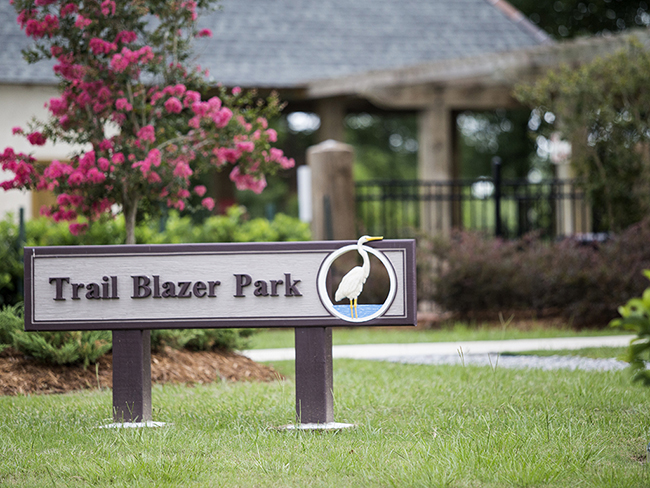
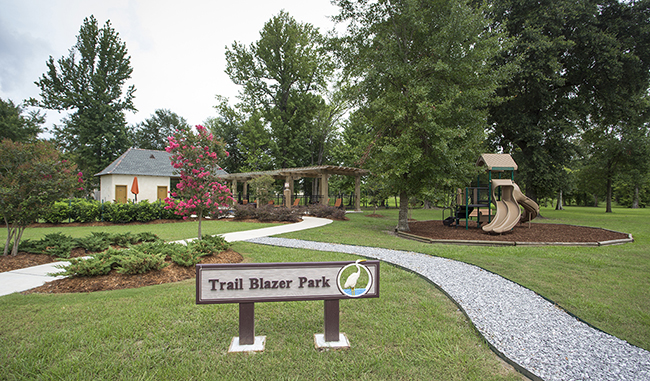
The subdivision itself also has a lot to offer.  In addition to being able to buy your own lot and custom build your new home (if you wish); you can also enjoy walking and hiking trails carved out around the community.  Inside the community we have built a community swimming pool, tot lot / playground, and tennis courts as amenities for our new home buyers.  New Homes are available now at The Parks of Plaquemines, and we are slowly building out the community with both traditional housing as well as new construction garden homes in our Villas Neighborhood.

3-099Our master planned neighborhood is located near everything the West Bank in Jefferson Parish has to offer with shopping, dining, and entertainment locations, the day-to-day office visits that are “life necessary” such as doctor’s and dentist’s visits, veterinarian appointments, and even home business visits such as accountants and lawyers.   There are two ways to access New Orleans – across the Crescent City Connection bridge or by ferry at Algiers Point.  New ferry boats are in the works because of a bill signed recently by the governor to get them operational as well.

Real estate in New Orleans is scarce, and prices are higher because of supply and demand.  If you are interested in living in an established neighborhood, you may want to consider living a little bit farther away in the comfort of a beautifully maintained and quality built subdivision such as The Parks of Plaquemines.  Contact Us at 504-364-2350 or E-mail Info@TheParksLifestyle.com for more information.